Living walls as a quiet force in urban comfort
How do you make living and working near an airport more pleasant? In the Urban Comfort Lab, a unique research project near Schiphol, researchers from AMS Institute, together with partners including TU Delft and Wageningen University & Research, set out to answer this complex question. A SemperGreenwall demonstrably delivers more greenery, more comfort, and a better living environment.
Noise, heat, and air pollution, the new urban challenges
Urban residents increasingly face a combination of noise nuisance, heat stress, and air pollution. In areas around airports there is an added burden, aircraft flying overhead. This constant peak noise is not just annoying; it can also cause stress and health complaints.
The Urban Comfort Lab investigates whether, and how, urban design and architectural interventions, such as green façades, can reduce this noise pressure. And the findings are promising.
The test setup:
three streets, three scenarios
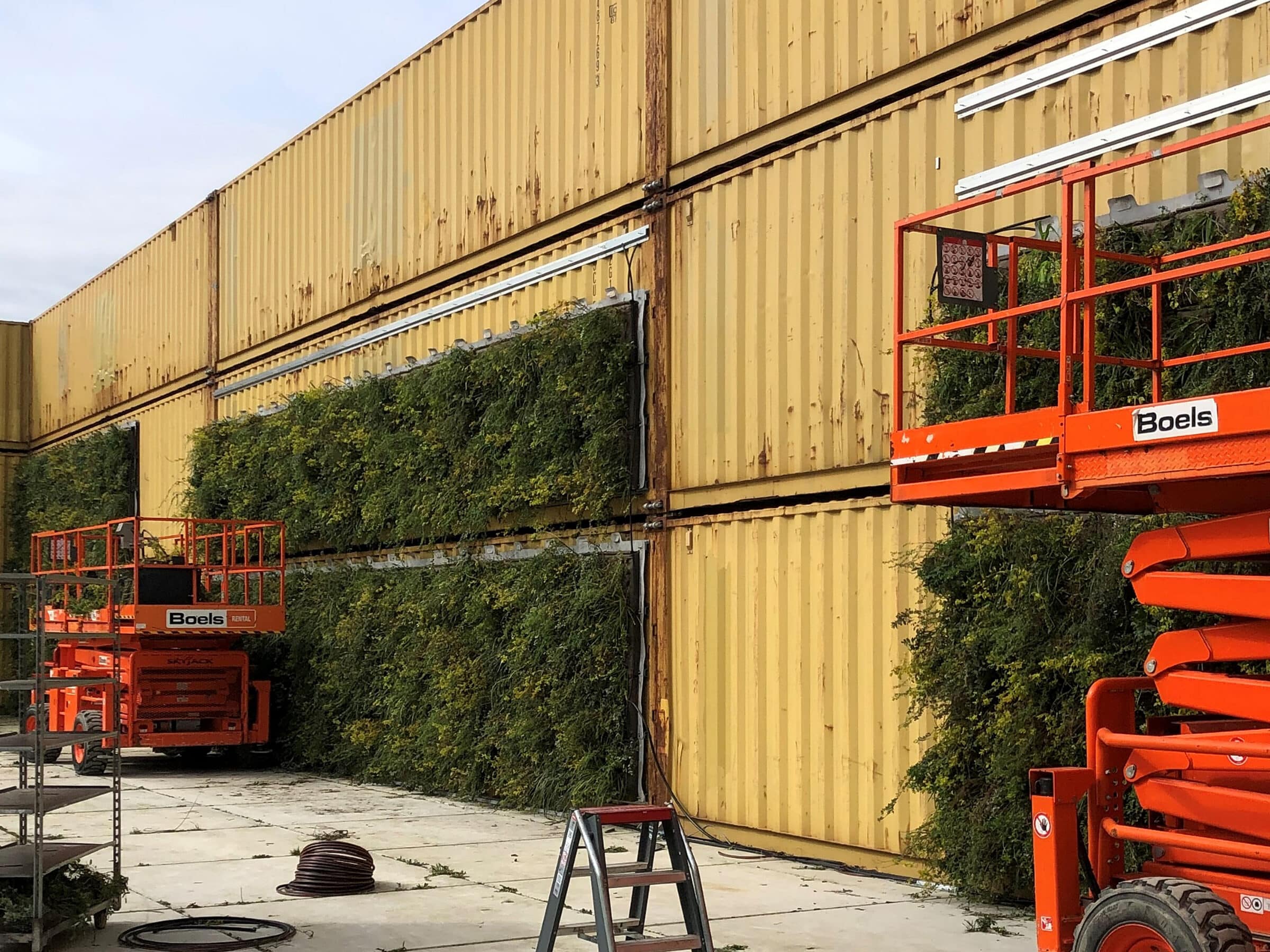
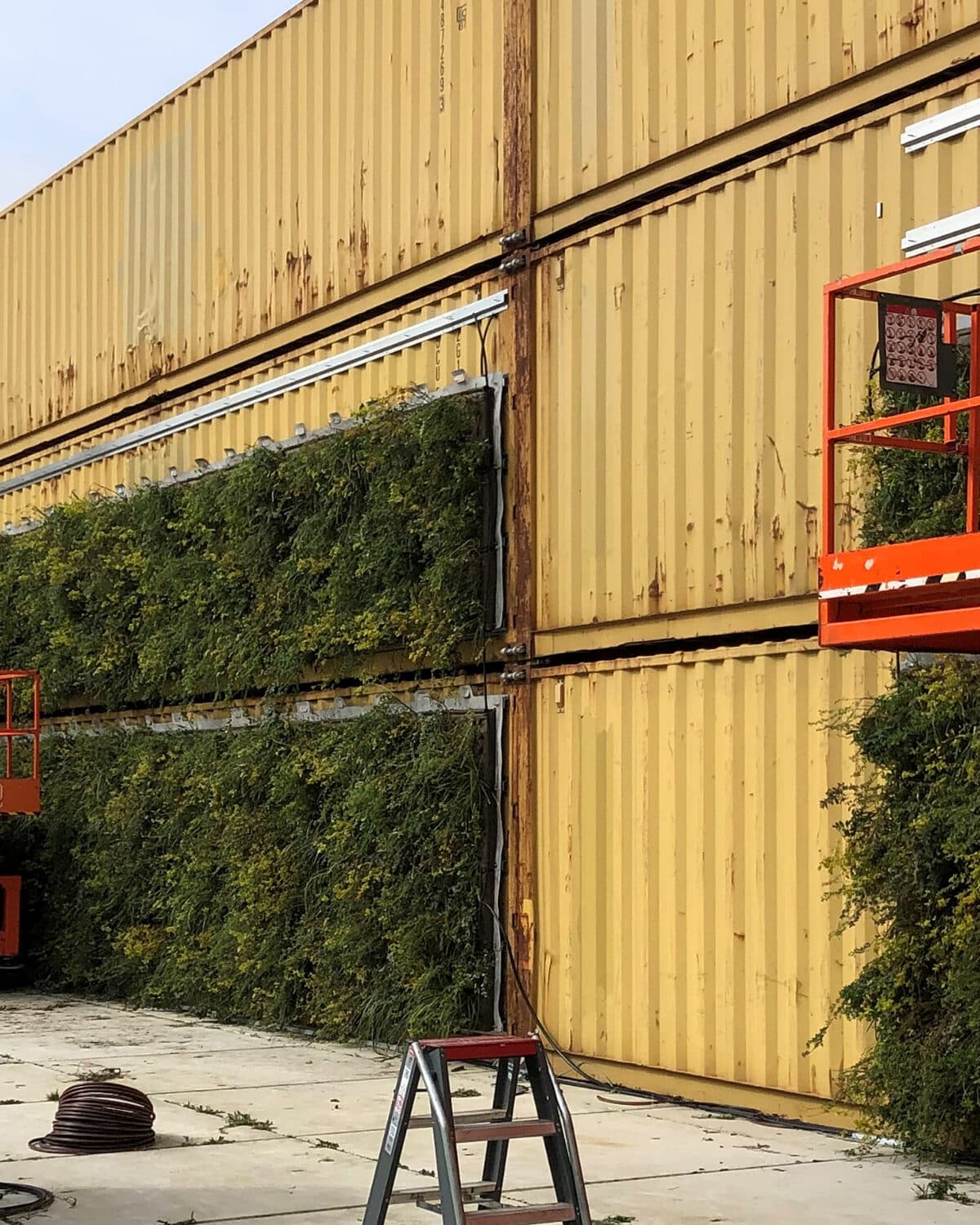
The Urban Comfort Lab was a temporary test village, built from more than 120 stacked shipping containers. Three streets were created, each with a different layout:
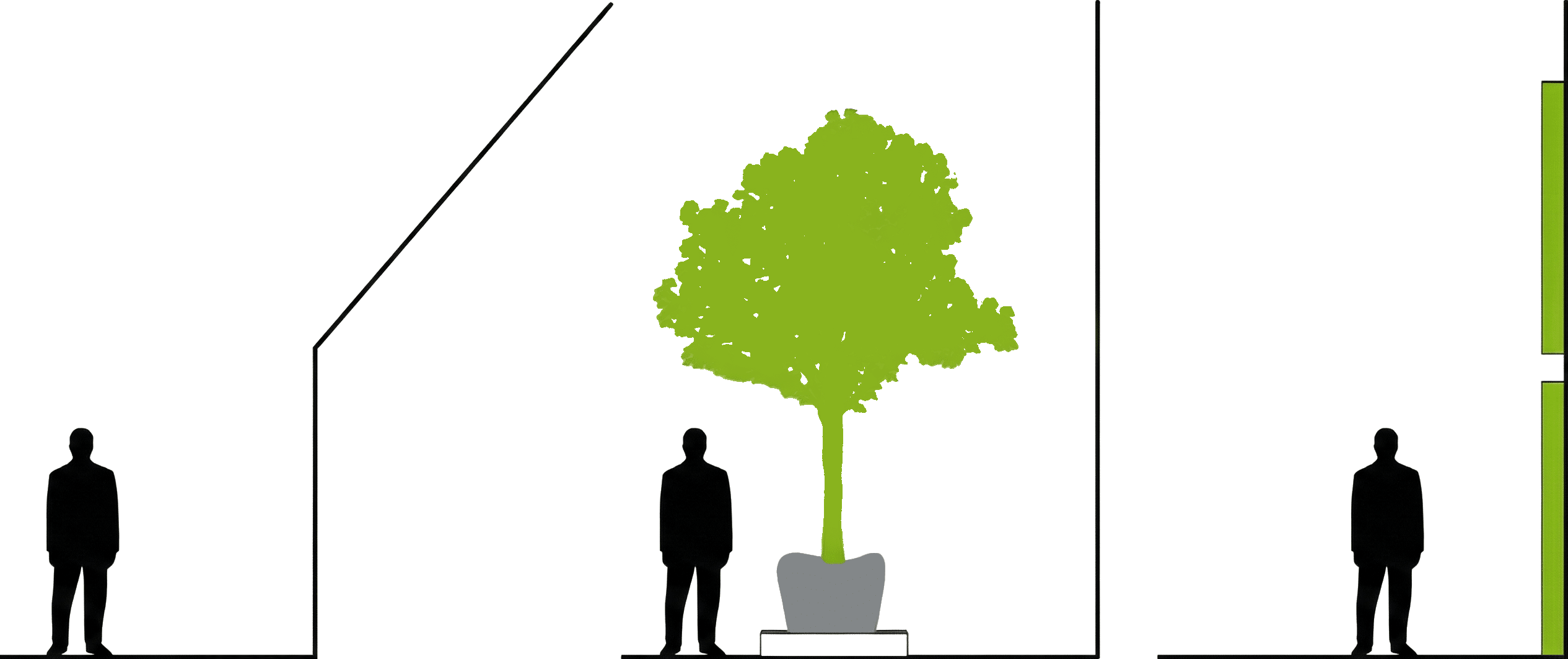
- A street without greenery
- A street with trees
- A street with a 120 m² SemperGreenwall
All streets were equipped with sensitive sensors that recorded sound 24/7 over a two-year period. In addition, researchers conducted experimental measurements of temperature and air quality. This provided a precise picture of how vegetation influences urban living comfort.
The results
Result 1:
Green façades reduce aircraft noise
Measurements show that near the SemperGreenwall, aircraft noise was reduced by an average of 3 dB for arriving flights, and up to 5 dB for departing flights. That may sound modest, but a reduction of 3 dB already represents a halving of sound intensity. And that difference is clearly audible to residents.
The SemperGreenwall performed better than expected. Notably, the green façade even outperformed trees. In combination with different building forms, a SemperGreenwall can make a significant difference compared to traditional construction. Even with a relatively small surface area, a large effect is achieved. This makes the measure not only effective, but also space-efficient, ideal for dense urban areas.
A green wall with a porous substrate structure absorbs sound through friction of air within the pores, converting sound into heat.
— Martijn Lugten, Research Fellow AMS Institute
Result 2:
green walls actively cool the environment
Heat stress was also examined through experimental measurements. Evaporation of moisture through plants provides natural cooling. Although only 6% of the façade surface in a courtyard with limited air circulation and many heat-absorbing materials was covered by a SemperGreenwall, an average temperature reduction of 1°C was still measured in the immediate surroundings. In a more open streetscape, with more greenery, this effect is expected to be significantly greater.
Result 3:
living walls improve air quality
Experimental air-quality measurements were also carried out during the study. These focused on air pollution from particulate matter (PM10, PM2.5, PM1) and nitrogen oxides (NOx). During these measurements, the SemperGreenwall showed a reduction of 8 to 15% in the concentration of these harmful substances. The results underline the positive impact of green façades on air quality in urban areas.
The next step:
designing the livable city of tomorrow
The lessons from the Urban Comfort Lab extend far beyond airport areas alone. They help cities, architects, and developers make better-informed design choices. Whether it’s busy residential neighbourhoods, schools, parking garages, or hospitals, a SemperGreenwall can make a real difference.
Want to enhance urban comfort with natural solutions? Discover what a green façade can mean for your project.
Contact Us